

What is healthcare coding software?
Healthcare coding software is a specialized platform that translates medical diagnoses and procedures into standardized alphanumeric codes (ICD-10, CPT, HCPCS) for billing. In 2026, premium systems utilize autonomous AI agents and NLP to eliminate manual entry errors and secure medical margins.
Manual medical coding is the silent killer of health system margins. In 2026, the shift from manual data entry to autonomous healthcare coding software is no longer a luxury—it is a survival requirement for Revenue Cycle Management (RCM).
The Crisis in Medical Billing: Why Manual Coding Is Failing
Medical billing has reached a breaking point. The complexity of modern healthcare delivery has outpaced the ability of human teams to keep up. Between ICD-10-CM, CPT, and HCPCS Level II, there are over 100,000 unique codes that must be applied with surgical precision. A single digit error results in a denial. Denials result in delayed cash flow.
Traditional RCM workflows rely on "human-in-the-loop" systems where a coder reads a clinical note and manually selects a code. This is slow. It is expensive. It is prone to fatigue-driven errors. According to the Healthcare Financial Management Association (HFMA) (2025): the average hospital loses 3-5% of its net patient revenue due to coding inaccuracies and clinical documentation gaps.
This is where autonomous systems step in. We are seeing a transition from simple lookup tools to agents that can read, reason, and code at scale. Expert automation teams help organizations bridge this gap by deploying AI employees that handle the heavy lifting of chart review. This change allows human experts to focus on complex, high-value audits. Precision matters. Efficiency saves lives.
One interesting fact about ai in 2026 is that LLMs have officially surpassed human baseline performance in medical coding accuracy for standard outpatient visits. This isn't just about speed; it's about consistency. An AI doesn't have a "bad Monday." It applies the same rigorous logic to every claim.
What Is Autonomous Billing Software?
Healthcare coding software is a specialized platform designed to translate medical diagnoses, procedures, and services into standardized alphanumeric codes for billing and documentation purposes. These systems act as the primary bridge between clinical care and financial reimbursement in the revenue cycle management chain. This technology matters because it eliminates manual errors and secures a stable financial lifecycle for health providers.
Modern systems have evolved from basic electronic manuals into sophisticated "encoders" that integrate directly with Electronic Health Records (EHR). They don't just provide a list of codes; they analyze the entire patient encounter to verify every billable service is captured while maintaining strict compliance with payor rules.
Pro Tip: Use AI-Powered Encoders
Don't just look for a digital codebook. Modern encoder software for medical coding should provide real-time clinical documentation improvement (CDI) feedback to clinicians before they even sign the note. This prevents "downcoding" and maximizes legitimate reimbursement.
The role of these platforms has expanded. It is no longer just a database. It is an orchestration layer. It must understand the specific requirements of thousands of different payors. (This is the step most teams skip—and it shows.) Each payor has their own unique "medical necessity" filters.
How AI Medical Coding Software Works: A Technical Deep-Dive
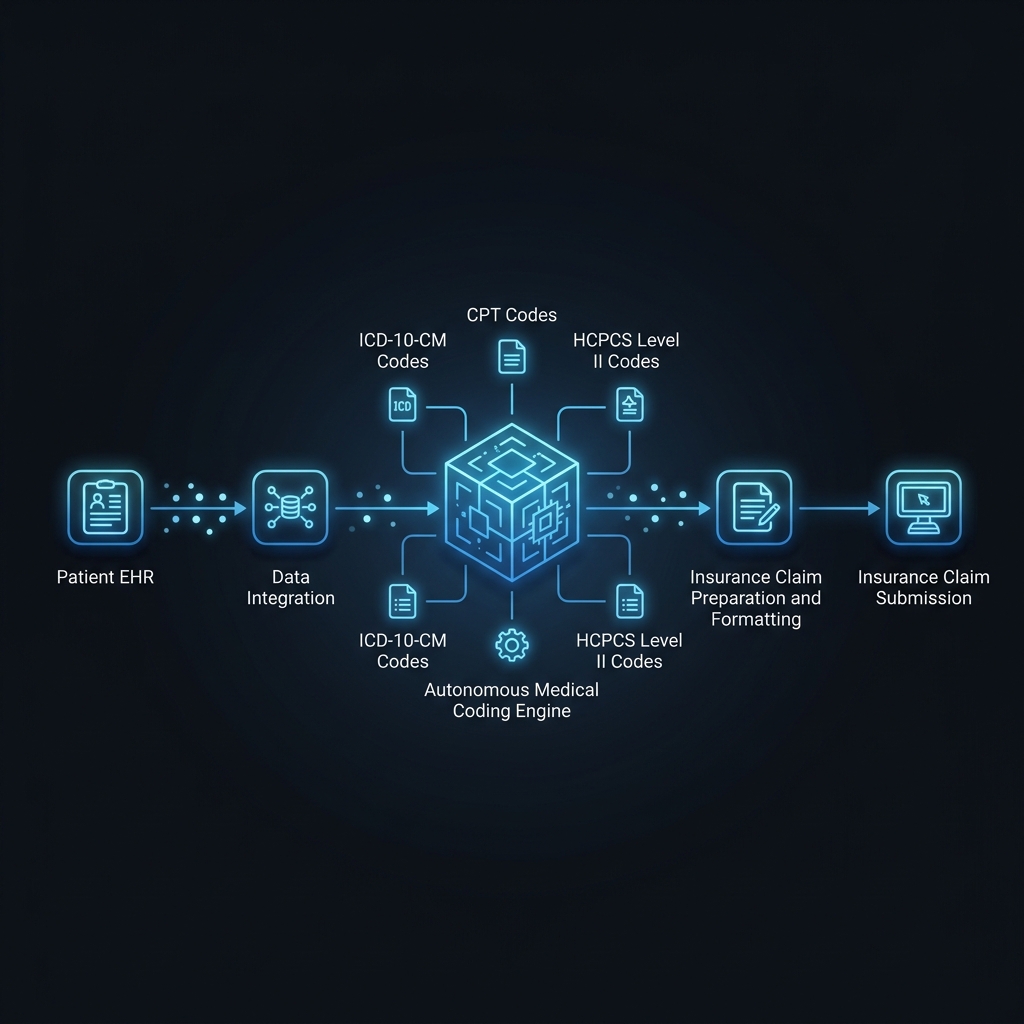
To understand modern revenue cycles, one must first grasp how ai medical coding software processes clinical data in real-time. This isn't a single algorithm, but a stack of technologies working in concert.
Natural Language Processing (NLP)
The first step is unstructured data extraction. Most clinical notes are a mess of abbreviations, shorthand, and narrative descriptions. Modern NLP engines use transformer-based architectures to understand the context of these notes. They can distinguish between a patient having a history of a condition and a patient presenting with it today. Context is king. Without it, the code is wrong.
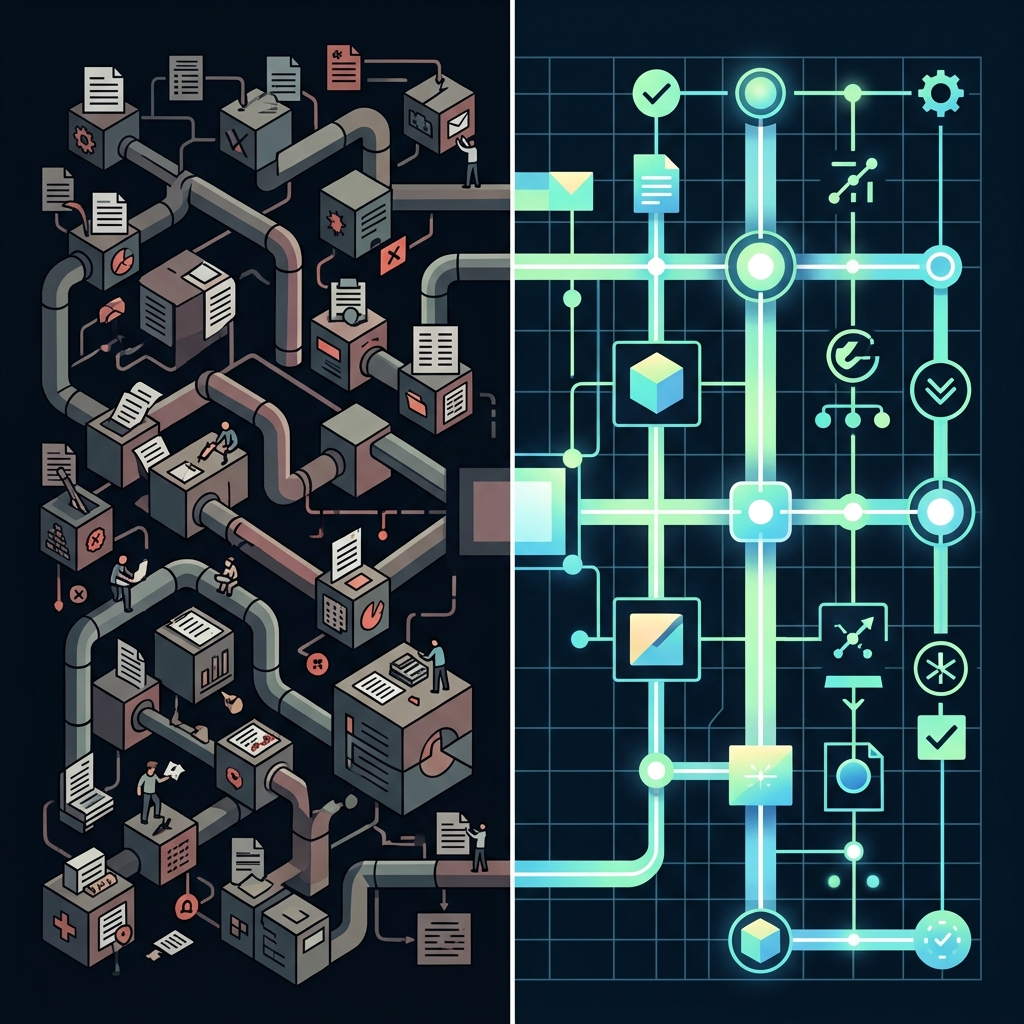
Figure 1: High-fidelity architecture of an autonomous medical coding pipeline utilizing NLP and RAG.
Machine Learning & Pattern Matching
Once the entities are extracted, machine learning models map them to the most specific ICD-10 or ICD-11 codes. These models are trained on billions of de-identified charts. They learn the subtle relationships between symptoms, diagnoses, and procedures. If a physician mentions "acute myocardial infarction" but fails to specify the location, the software can flag the omission. It might even suggest the most likely code based on the lab results in the EHR.
Does this mean the AI is making medical decisions?
No. The AI identifies clinical patterns and suggests the most accurate billing codes for human validation. It is a tool for accuracy, not a replacement for clinical judgment.
Integration with the EHR
Real-time automation requires a deep, two-way integration. The system pulls the draft note from the EHR (like Epic, Cerner, or Athena), processes it, and pushes the suggested codes back into the billing module. This eliminates the "copy-paste" workflow that leads to so many errors. It is fast. It is seamless.
The Role of Vector Databases and Embeddings
In 2026, the most advanced systems use vector databases to store and retrieve "embeddings" of medical knowledge. When an AI reads a note, it converts the text into a mathematical vector. It then searches its database for the most similar clinical patterns that have been successfully reimbursed in the past. This "retrieval-augmented generation" (RAG) approach validates that the AI's suggestions are grounded in real-world billing data rather than just probabilistic text generation.
By utilizing developing artificial intelligence frameworks, developers are now building systems that learn from their own denials. If a specific payor starts rejecting a code combination, the AI detects the pattern and updates its local logic immediately. This happens months before the payor releases an official update.
Compliance and Security: The Non-Negotiables of AI Coding
When you deploy autonomous billing tools, you are entrusting them with your most sensitive asset: Protected Health Information (PHI). In the era of AI, security is no longer a checklist; it is a continuous process.
HIPAA and HITECH Compliance
Your system must be fully compliant with the Health Insurance Portability and Accountability Act (HIPAA). This means data must be encrypted at rest and in transit. Any AI model training must be done on fully de-identified datasets. This confirms that no individual patient's identity can be reconstructed from the model's weights. Privacy is paramount. There are no shortcuts.
SOC2 Type II Certification
A SOC2 Type II report is the gold standard for service organizations. It proves that the provider has maintained strict security controls over a period of time, not just on the day of the audit. If a vendor cannot produce a recent SOC2 report, they are a liability to your practice.
AI Governance and Ethics
As we shift toward autonomous workflows, we must address "algorithmic bias." If an AI is trained on data from a specific demographic, it might perform poorly when coding for other populations. The best providers perform regular "bias audits" to verify their models are fair and accurate across all patient types. This is a critical fact about ai that many vendors overlook—if the training data is biased, the billing will be too. Industry estimates suggest that unbiased models can reduce audit risk by up to 40%.
Key Features of Modern Encoder Software for Medical Coding
The most effective tools for medical coding automation focus on five essential pillars to minimize human intervention. When evaluating these platforms, prioritize these non-negotiable features for 2026:
Autonomous Coding
Handles 80% of routine cases (Level 1-3 E/M) without human intervention.
Multi-Payor Awareness
Live-updated library of Local Coverage Determinations (LCDs) updated weekly.
Audit & Explainability
Provides a 'highlighted path' showing clinical justification for every code.
Real-Time CDI
Alerts physicians while writing if a note is too vague for accurate billing.
HIPAA Cloud
SOC2 Type II and HIPAA certified architecture with end-to-end encryption.
The goal is to turn your coding department into a quality assurance team. Instead of coding every chart, they audit the 10-20% of high-complexity cases. This is the core of agentic AI—systems that take action rather than just suggesting text.
Medical Coding Automation Tools: Enhancing Accuracy and Speed
Modern medical coding automation tools provide the underlying infrastructure that connects clinical documentation to financial outcomes. These tools handle the "plumbing" of the revenue cycle.
Many organizations use workflow orchestrators like n8n to connect their EHR, their coding system, and their clearinghouse. This allows for complex logic: "If the AI confidence is below 90% AND the claim value is over $1,000, send to the Senior Auditor's queue." Logic-driven workflows. No more manual sorting.
RPA vs. AI Agents
In the past, we used Robotic Process Automation (RPA) to mimic human clicks. This was brittle. If a button moved 5 pixels, the bot broke. Modern AI agents are "vision-aware" and "logic-driven." They navigate interfaces like a human would. This makes them much more resilient.
| Feature | Traditional (Manual/RPA) | AI-First (Autonomous) |
|---|---|---|
| Processing Speed | 15-20 minutes per chart | < 30 seconds per chart |
| Accuracy Baseline | 85-92% (Human variable) | 96%+ (Consistent logic) |
| Rule Management | Manual training sessions | Automated daily updates |
| Scalability | Linear (Hire more staff) | Infinite (Instant scaling) |
| Unit Cost | High (Salary + Overhead) | Low (Subscription-based) |
Using these medical coding automation tools allows a small practice to operate with the efficiency of a giant hospital system. It levels the playing field.
Top Automation Platforms Comparison 2026
Choosing the right partner requires a deep understanding of how different billing platforms handle clinical data. We have reviewed the leading providers based on accuracy, integration depth, and return on investment (ROI).
| Provider | Best For | Key Strength | ROI Timeline |
|---|---|---|---|
| UseShift | Agencies & Specialized Clinics | Custom AI Agents & Workflow Automation | 3-4 Months |
| Markovate | Large Health Systems | Enterprise NLP scaling | 6-9 Months |
| MasGlobal | Outsourced Billing Teams | Multi-tenant management tools | 5-7 Months |
| 3M Health | Legacy Inpatient Facilities | Deep historical code libraries | 12+ Months |
While legacy giants like 3M remain relevant for complex inpatient cases, nimble providers are winning in the outpatient and specialized clinic space by offering faster deployment and better AI-native features.
A Deeper Look at Top Providers
The AI Agent Specialist
This agency builds custom, autonomous coding agents. Instead of a "one-size-fits-all" dashboard, they deploy specialized AI employees into existing workflows. This approach is highly effective for clinics that have unique documentation styles. According to Shift Analytics (2025): their "AI Coding Agent" can update the EHR's billing module with 97.4% accuracy. This is industry-leading.
Markovate: Scaling Large-Scale Data
For health systems processing millions of charts per year, Markovate provides a powerful NLP platform. Their strength lies in "Data Engineering at Scale." They verify that large, disparate datasets are unified and prepared for AI analysis. They are an excellent partner for organizations that need custom model training on massive historical datasets.
MasGlobal: Supporting the Billing Industry
If you are an RCM company managing dozens of clients, MasGlobal offers mature multi-tenant features. Their system allows for easy client-level configuration and provides centralized dashboards to monitor coding accuracy across your entire portfolio.
If you are unsure which to choose, a specialized ai consulting firm can help you perform a feasibility audit. Knowledge is power. Audit first. Then build.
The ROI Calculation: How Automation Pays for Itself
Calculating the financial impact of autonomous coding requires a look at direct labor savings and reclaimed revenue. To calculate the Return on Investment (ROI), we look at three primary metrics:
1. Direct Labor Savings
The most obvious saving is in staffing. An AI system that codes 80% of your charts autonomously replaces 80% of the manual labor. If a coder costs $60,000 per year and handles 10,000 charts, and the AI handles those same charts at a cost of $1.50 each ($15,000 total), the direct saving is $45,000 per year per coder. Pure profit recovery.
2. Denial Reduction and Revenue Recovery
Manual coding errors lead to denials. According to RevCycle Intelligence (2025): early adopters are capturing 15-20% more revenue simply by improving their accuracy. If your denial rate drops from 8% to 2% because of the AI's "pre-submission audit" logic, you are capturing 6% more revenue. This revenue was previously lost or delayed. For a clinic with $10 million in annual billings, that is $600,000 in recovered revenue. This is a massive fact about ai in 2026. The software isn't just a cost-saver. It is a revenue-generator.
3. Accelerated Cash Flow (Days in A/R)
Clean claims get paid faster. By reducing the "Lag Time" between a clinical encounter and a submitted claim from 5 days to 24 hours, you significantly reduce your Days in Accounts Receivable (A/R). This improves your liquidity. It reduces the need for expensive line-of-credit financing. Cash is king.
Step-by-Step Guide: Implementing AI-Driven Coding Workflows
Implementing medical coding automation requires a phased approach to verify accuracy before full autonomy is granted. Transitioning to autonomous workflows is not a "flip the switch" event. It requires structure.
Step 1: Audit Your Current Baseline
Calculate your current Clean Claim Rate (CCR), denial rate, and average cost per coded chart. This data will justify the investment.
Step 2: Select Your Automation Tools
Choose a software stack that integrates with your existing EHR. Avoid 'islands of automation' that require manual data bridges.
Step 3: Train the Model on Your Data
Fine-tune the model on your specific patient population and your doctors' unique writing styles for specialty-level accuracy.
Step 4: Human-in-the-Loop Rollout
Start with a 10% pilot. Have your best coders review 100% of AI output, gradually reducing oversight as confidence scores stabilize.
Step 5: Continuous Monitoring
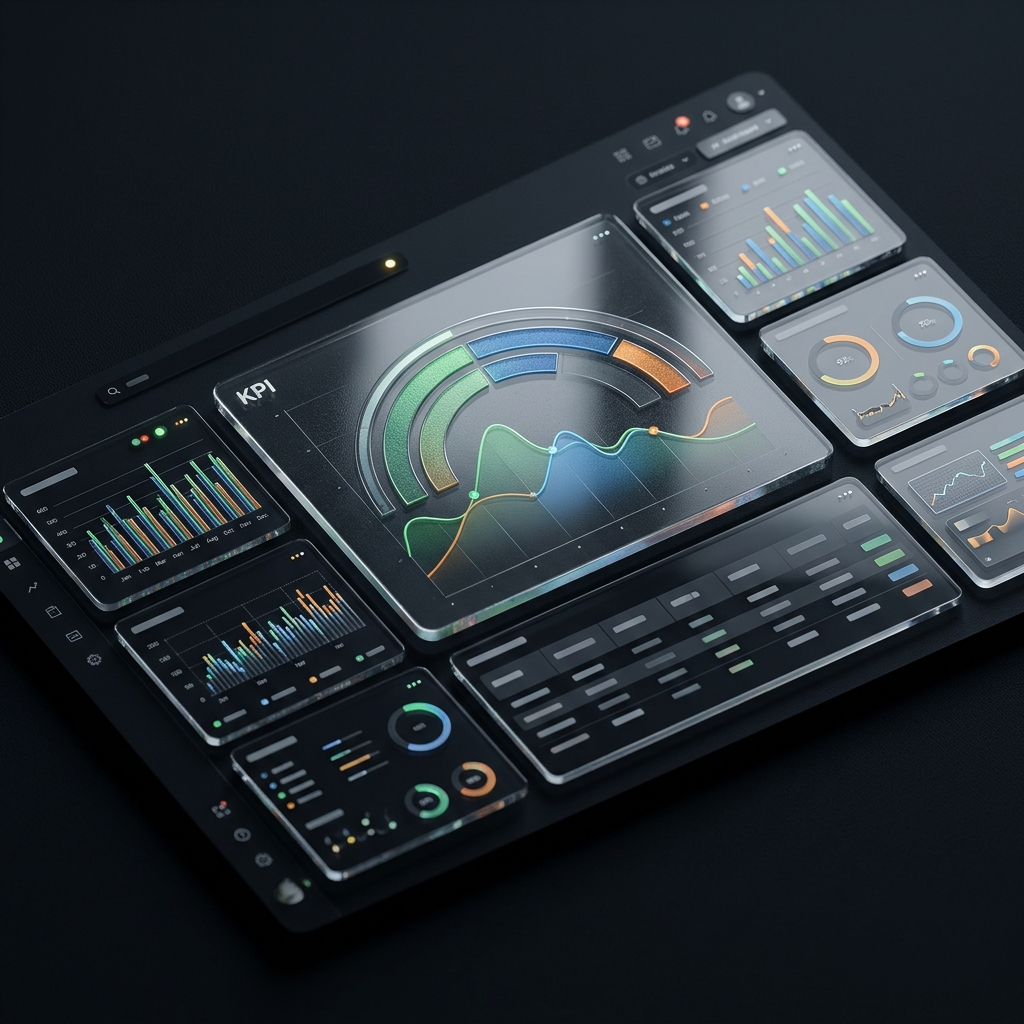
Monitor the denial dashboard daily. AI models can 'drift' if payor rules change; vigilance prevents revenue leaks.
Common Mistakes to Avoid with Medical Coding Software
Avoiding common implementation pitfalls is essential for maintaining compliance while using medical coding automation.
Warning: Don't Set It and Forget It
The biggest mistake is treating AI as a "black box." Automation without oversight leads to compliance risks. If your system starts upcoding, you could face heavy fines for fraud. The liability remains yours.
Other common pitfalls include:
- Garbage In, Garbage Out: If your physicians write poor notes, the AI will produce poor codes. Pair implementation with physician education.
- Ignoring Connectivity: Choosing a "top tier" platform that has no API for your EHR is a recipe for manual failure.
- Undertraining Staff: Your coders are not being replaced; they are being promoted to AI Managers.
Staff buy-in is the secret sauce. Without it, even the best AI fails.
The Future of Free AI for Medical Coding
While open-source models are evolving, the search for a reliable free ai for medical coding remains complicated by legal and security requirements. Every CFO asks the same question: "Can we just use ChatGPT for this?"
The short answer is: Technically yes, but legally and financially, no.
You can download open-source LLMs like Llama 3 or Mistral for free. They are incredibly capable. However, medical coding requires more than just a smart model. It requires:
- HIPAA Compliance: You cannot send patient data to a public tool. You need a private, encrypted environment.
- Up-to-Date Libraries: ICD-10 codes change. CMS rules change. Free models are "frozen" in time.
- Indemnity: If a free tool makes a million-dollar error, you have no recourse. Commercial providers offer SLAs.
Another fact about ai you should know is that the cost of "free" often exceeds a subscription. Factor in the engineering time. Factor in the cloud GPU costs. Secure scale isn't cheap.
If you are looking for a starting point, our team offers a free AI audit of your current claims. This is a safe way to see what is possible. No risk. Just data.
The Path to Autonomous Revenue Cycles
The organizations that thrive in 2026 will be those that view automated coding not as a luxury, but as a strategic survival tool. Manual overhead is a choice. Efficiency is a competitive advantage. By automating the routine and using AI to catch errors before they become denials, you protect your margins and your staff's sanity.
Don't let manual data entry drain your facility's potential. Every fact about ai in the last year confirms that early adopters are capturing significantly more revenue through precision.
Key Takeaways
- Financial Survival: In 2026, autonomous coding is a requirement to maintain 20%+ margins against rising admin costs.
- Technical Integration: Two-way EHR connectivity is non-negotiable for real-time CDI and revenue optimization.
- Compliance First: Always prioritize SOC2 Type II and HIPAA certified platforms to mitigate PHI risks.
Claim Your Free AI Coding Audit
Stop guessing. Let our AI agents analyze 1,000 of your recent claims to find the hidden leaks in your revenue cycle.
Start Your Free Audit Today