

What is an AI consulting firm?
AI consulting firms are specialized technical advisory and implementation partners that design, build, and deploy custom artificial intelligence systems. They move beyond simple chat interfaces to create autonomous agents and multi-agent workflows that integrate with existing business data silos to drive measurable ROI.
The gap between experimenting with ChatGPT and deploying a production-ready autonomous agent is wider than most executives realize. In early 2026, the market is flooded with self-proclaimed experts, yet few organizations have successfully integrated AI into their core operational logic. This is where specialized specialized advisors step in. They bridge the divide between raw model capabilities and actual business outcomes.
Choosing from the thousands of technical advisors requires a shift in how you evaluate technical partners. It is no longer about who can build a mobile app or a website. It is about who understands the architecture of intelligence. The best specialized advisors today are not just writing code. They are designing autonomous systems that reason, act, and learn within the specific constraints of your industry.
At UseShift, we see businesses struggle with the "Proof of Concept (PoC) trap." They build a chatbot that works 80% of the time, but they cannot get it to 99% reliability for customer-facing operations. Professional AI consulting focuses on that final 20%—the hardest part of the journey. This guide breaks down the current market of top specialized advisors, how they operate, and how to select the partner that will actually move your needle.
What is an AI Consulting Firm?
An AI consulting firm is a specialized technical partner that helps organizations identify, design, and deploy artificial intelligence solutions to solve specific business problems. In 2026, the definition has evolved. It is no longer enough to just "call" an API. Modern consulting involves deep integration of agentic workflows into existing ERP and CRM systems.
Unlike traditional software houses, ai consulting companies focus on the data-to-decision pipeline. They don't just build an interface. They build the cognitive engine behind the interface. This includes selecting the right Large Language Models (LLMs), designing Retrieval-Augmented Generation (RAG) architectures, and fine-tuning models on proprietary data. (This is the step most teams skip—and it shows.)
The shift toward agentic AI vs generative AI has redefined the role of these firms. While generative AI creates content, agentic AI takes action. The top ai consulting companies are now architects of multi-agent systems where different AI "employees" collaborate to finish complex tasks. For example, one agent might research a lead, another drafts a personalized proposal, and a third updates the CRM, all without human intervention.
Core Services of Modern AI Consultants
Most specialized advisors offer a suite of services designed to take a project from an idea to a scaled deployment:
- AI Strategy & Roadmapping: Identifying where AI can provide the highest ROI. This involves a "feasibility audit" to see if your data is ready for AI.
- Model Selection & Tuning: Choosing between closed-source models like GPT-4o or Claude 3.5 and open-source models like Llama 3 or Mistral.
- Agentic Workflow Design: Building the logic that allows AI to use tools (like your email or database) to perform tasks.
- Data Engineering for AI: Cleaning and structuring data so models can use it effectively without "hallucinating" or leaking secrets.
- Change Management: Training your human staff to work alongside their new AI colleagues.
Types of AI Consulting Partners
Choosing between different specialized advisors requires understanding their core business models and technical specializations. The market is currently split into three distinct categories. Each serves a different need, and picking the wrong "type" of partner is a common cause of project failure. Cost, speed, and technical depth vary significantly between them.
1. Boutique AI Consulting Firms
These are small, highly specialized teams often led by industry veterans or PhD-level researchers. Boutique specialized advisors prioritize innovation and custom builds over mass-market templates. They are ideal for high-stakes projects where you need a "bespoke" solution that doesn't exist yet.
If you are looking to build a proprietary agentic system that gives you a competitive moat, a boutique firm is usually the best choice. They offer high-touch service and deep technical expertise. Because they are agile, they can pivot quickly as new models are released. UseShift operates in this space. We focus on developing artificial intelligence that replaces manual overhead with autonomous workflows. Focus on the core. That is our mantra.
2. Large Scale Data and AI Consulting Giants
These are the global integrators like the "Big Four" (Deloitte, PwC, EY, KPMG) or technology giants like Accenture and IBM. They specialize in data and ai consulting at a massive scale. If your project involves migrating a 50,000-person organization to a new AI-enabled cloud infrastructure, these are the firms you call.
Their strength lies in their ability to handle legacy systems and regulatory compliance across multiple countries. However, they can be slower to adopt cutting-edge techniques and often come with a significantly higher price tag. They are best for "boring but essential" AI integrations. In these scenarios, stability is more important than rapid innovation.
3. AI Consulting Startups
This is the newest and most volatile category. AI consulting startups are often VC-backed and product-led. They might have a specific "accelerator" or software platform they use to speed up deployment. For instance, a startup might specialize in "AI for Law" and have pre-built agents for contract review using tools like Ironclad or LexisNexis.
They are excellent for rapid prototyping and R&D. If you want to see a working MVP in two weeks, a startup is your best bet. The risk is long-term stability—startups may pivot their business model or run out of funding mid-project.
How to Choose the Best AI Consulting Firms
Selecting the best specialized advisors involves a rigorous evaluation of their technical stack, past performance, and internal evaluation frameworks. Selecting the best specialized advisors requires looking past the marketing jargon. Everyone says they do "AI." Very few can explain how they handle model drift or prompt injection attacks. Use the following criteria to filter your options.
Technical Benchmarks
A legitimate ai consulting company in usa or elsewhere should be able to discuss their internal tech stack in detail. Ask them about their approach to:
- RAG Architecture: How do they guarantee the AI has access to your latest data without retraining the model every day?
- Evaluation Frameworks: How do they measure "truthfulness" or "accuracy"? Do they use tools like RAGAS or Arize Phoenix?
- Agent Orchestration: Do they use LangChain, CrewAI, or Microsoft's AutoGen? Why did they pick one over the other for your specific use case?
- Security: How do they prevent "prompt injection" where a user tricks the AI into giving away company secrets?
Deep Dive: Technical Evaluation Frameworks
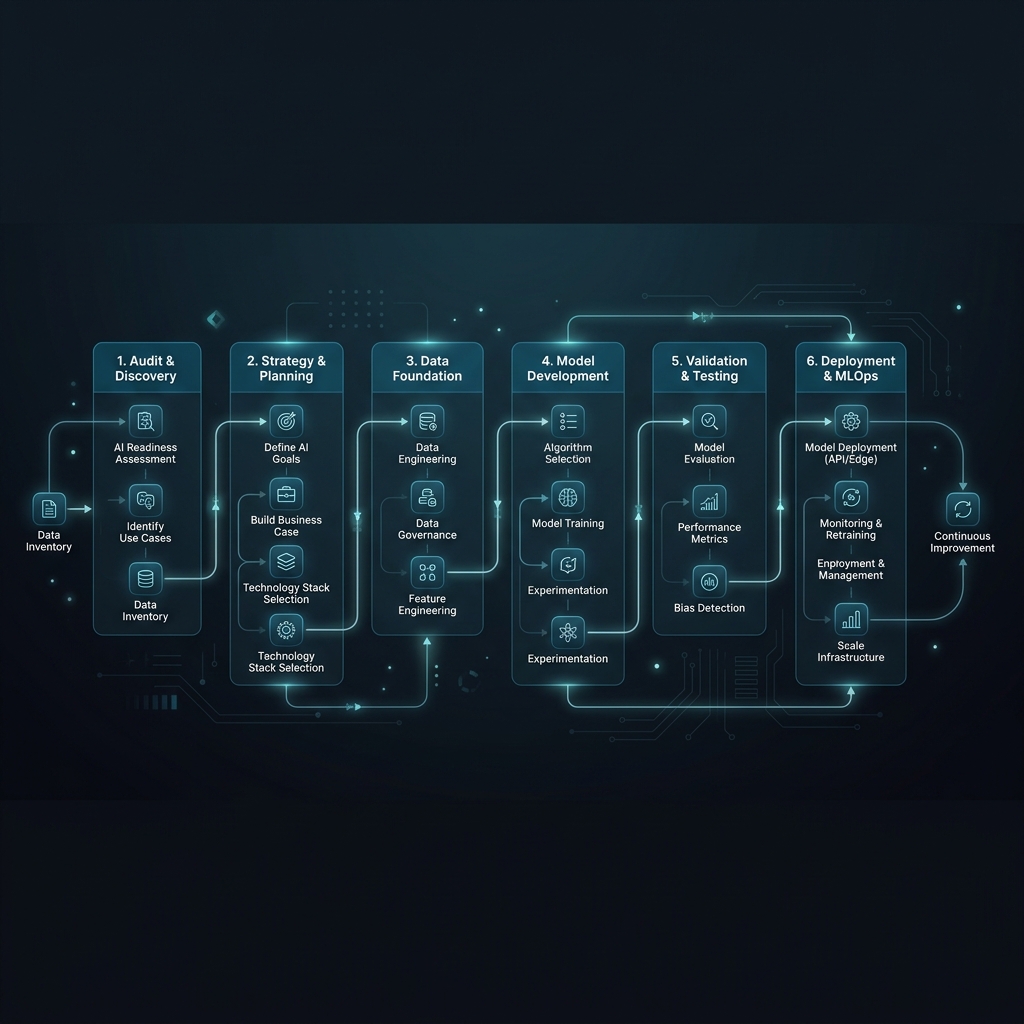
The difference between a hobbyist and one of the best specialized advisors is how they handle "Evaluation" (Eval). In traditional software, you have unit tests. In AI, you have probabilistic outcomes. A top ai consulting company will use a multi-layered evaluation framework to guarantee reliability:
- Semantic Similarity: Using models to check if the AI's answer is semantically close to a "gold standard" answer.
- Faithfulness & Grounding: Does the answer actually come from the provided data, or did the AI make it up?
- Adversarial Testing: Intentionally trying to "break" the agent by providing conflicting instructions or nonsensical data.
- Latency vs. Accuracy Trade-offs: Measuring how much accuracy you lose if you switch from a 1.2-trillion parameter model to a smaller, faster 70-billion parameter one.
Professional specialized advisors provide a "Quality Score" for every agent they deploy. Without these metrics, you are flying blind.
The Future of AI Consulting: Multi-Agent Systems and Self-Correction
As we move deeper into 2026, the top ai consulting companies are moving away from "single-bot" architectures. The future is "Multi-Agent Systems" (MAS). In this setup, a "Manager Agent" coordinates several "Worker Agents." It is like a digital orchestra. Each agent has a specific part to play.
For example, a marketing MAS might include:
- A Research Agent that monitors competitor websites.
- A Content Agent that drafts social media posts based on that research.
- A Compliance Agent that checks the posts against your legal guidelines.
- A Scheduling Agent that posts the content at the optimal time.
The most advanced boutique specialized advisors are even implementing "Self-Correction Loops." If the Compliance Agent rejects a post, it sends it back to the Content Agent with specific feedback. The AI fixes itself before a human ever sees it. This level of autonomy is what separates the best specialized advisors from those just selling simple ChatGPT wrappers.
Does this mean the human is entirely out of the loop? No. We recommend a "Human-in-the-Loop" architecture where humans act as the final quality gate for high-stakes decisions. (This prevents the AI from going rogue on your social media accounts.)
Case Study Audit
Look for ROI, not just features. A top ai consulting company should show you how they saved hours or increased revenue. For example, don't just look for "we built a customer service bot." Look for "we reduced support ticket resolution time by 60% while maintaining a 4.8/5 CSAT score."
At UseShift, we emphasize n8n workflow guides to show how we connect AI to the real world. Real case studies should include the technical challenges faced during integration—because no AI project is easy on the first try. Failure points are lessons.
10-Step Checklist for Working with AI Consulting Firms
To ensure your investment pays off, follow this structured path when engaging with ai consulting companies. This framework minimizes risk and maximizes speed to value.
- Define the Problem: Don't start with "We need AI." Start with "We spend 40 hours a week on X."
- Audit Your Data: Is your data in a format the AI can actually read (PDF, SQL, API)?
- Request a Feasibility Study: Before signing a long-term contract, ask for a 1-week audit.
- Evaluate the Tech Stack: Ensure they aren't just using one tool. They should be model-agnostic.
- Check for "Human-in-the-Loop" Designs: The AI should have a way to "escalate" complex issues to a human.
- Demand Local Compliance: Ensure the ai consulting company in usa (or your region) meets all legal standards.
- Focus on "Time to Value": How quickly will the first agent be live?
- Verify Post-Deployment Support: AI models need "tuning" as data changes. Who will do that?
- Own Your Intellectual Property: Ensure you own the custom prompts and the data pipeline.
- Measure ROI Early: Set a 90-day goal for cost savings or revenue generation.
Cultural Fit and Industry Knowledge
Does the firm understand your specific industry constraints? AI for a medical device company is fundamentally different from AI for a fashion retailer. Regulatory knowledge is paramount. An ai consulting company in usa will be better suited for handling HIPAA or SOC2 requirements for domestic firms than a generic offshore provider.
Comparison Table: Top AI Consulting Companies vs. Traditional Agencies
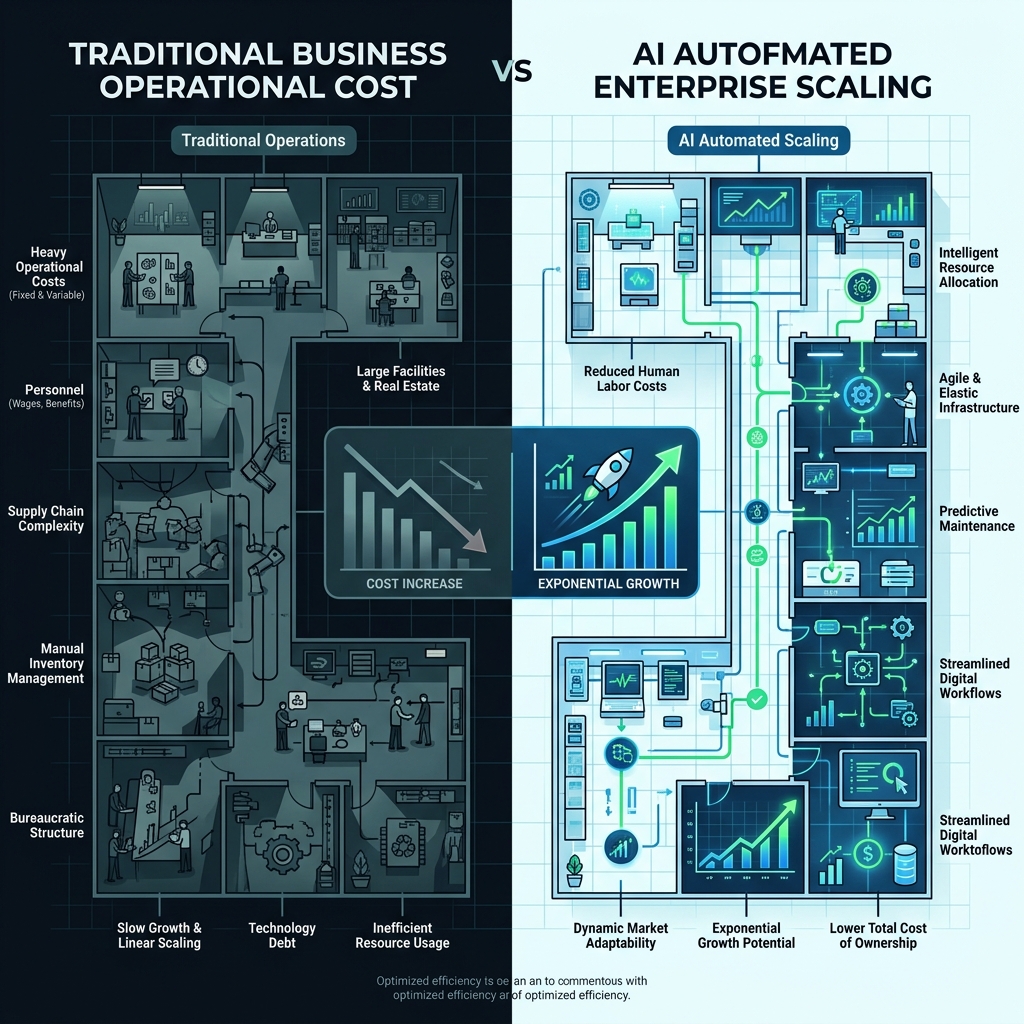
| Feature | Top AI Consulting Companies | Traditional Software Agencies |
|---|---|---|
| Primary Focus | Logic, Reasoning, and Data Flow | UI/UX and Feature Lists |
| Data Strategy | LLM Fine-tuning & Vector DBs | Relational Database CRUD |
| Success Metric | Autonomous Task Completion | User Retention & Page Views |
| Infrastructure | GPU Compute & Model Ops | Serverless & Cloud Hosting |
| Development | Probabilistic (Outcome-based) | Deterministic (Rule-based) |
| Maintenance | Model Drift & Bias Monitoring | Bug Fixes & API Updates |
The 5 Pillars of Successful AI Consulting
When you hire one of the best specialized advisors, they should guide you through a structured process. At UseShift, we follow these five pillars to ensure every deployment is a success. This is how we move from theory to production.
1. Discovery & Feasibility
According to Gartner (2025): Over 70% of AI projects fail because the use case was not technically feasible with current data. The first step is to identify "high-yield" targets. We look for tasks that are repetitive, data-heavy, and have clear success criteria.
We ask: Is the data available? Is it "clean"? Can an LLM reason through this task, or is it too subjective? A good ai consulting company will tell you when not to use AI. Honesty saves budgets.
2. Data Readiness & Engineering
AI is only as good as the context it receives. This pillar involves building "Knowledge Bases." We take your PDFs, Notion pages, and SQL databases and turn them into "Vector Embeddings." This allows the AI to "read" your company's brain in real-time.
Without proper data engineering, your AI will hallucinate. It will confidently tell a customer that your shipping is free when it actually costs $20. Engineering the "Source of Truth" is 80% of the work in modern infrastructure as code for AI. Data is the fuel.
3. Prototype Phase (Minimum Viable Agent)
We don't spend six months in a dark room building a finished product. We build a "Minimum Viable Prompt" or a single-agent prototype in weeks. This allows you to interact with the "intelligence" before we scale it.
During this phase, we test different models. Does GPT-4o perform better for this task, or is Claude 3.5 Sonnet more reliable? We use A/B testing for prompts to see which version produces the fewest errors. Fail fast, learn faster.
4. Integration & Tool Use
This is where the AI becomes "agentic." We connect the model to your actual tools. This might involve using ci and cd tools to automate the deployment of new agent behaviors.
Integration means the AI can look up a customer's order in Shopify, check the status in FedEx, and write a personalized email in Zendesk. It is no longer just "chatting"—it is "doing." Real work, real impact.
5. Scaling, Governance & PromptOps
Once a single agent works, we scale it. This involves "PromptOps"—the practice of managing prompts like you manage code. We set up monitoring to detect when the model starts performing poorly (model drift).
Governance is also critical. We ensure the AI follows your brand voice and doesn't violate any privacy laws. We implement "Guardrails" that sit between the AI and the user, acting as a filter for safety and accuracy. (This is non-negotiable for enterprise security.)
Geographic Focus: Finding an AI Consulting Company in USA
While AI is a global technology, location still matters for many businesses. Hiring an ai consulting company in usa offers several distinct advantages. Proximity breeds collaboration.
- Timezone Alignment: For complex implementation projects, you need to be able to jump on a call during your working hours.
- Data Privacy Laws: US-based firms are more familiar with local regulations like CCPA or industry-specific standards like FINRA.
- Onsite Workshops: Sometimes, the best way to identify automation targets is to sit in a room with your team and map out their manual workflows.
- Security Clearance: For government or defense-related work, a domestic partner is often a mandatory requirement.
The primary tech hubs for top specialized advisors remain Silicon Valley, Austin, and New York. However, remote-first elite teams are becoming more common. These teams often consist of high-performing engineers who left big tech to build more impactful solutions at boutique firms.
The ROI of AI Consulting: Why Pay for Experts?
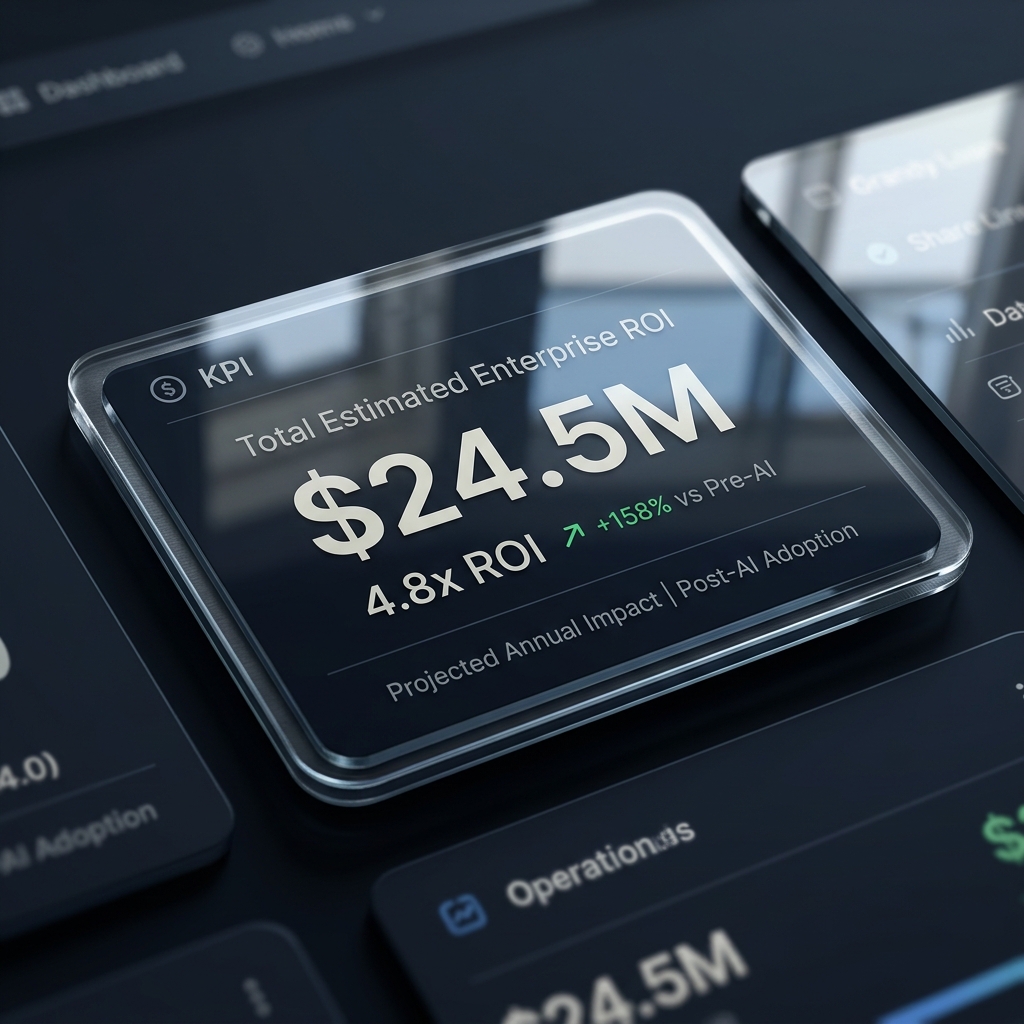
Internal IT teams often try to build AI internally. They assign a few developers to "look into OpenAI." This often results in expensive projects that never leave the prototype stage. According to IDC (2024): Companies that work with specialized specialized advisors see a 2.5x faster time-to-market compared to those using only internal teams.
The value of an expert is not just their ability to use the tools. It is their knowledge of the "edge cases." They know how to handle rate limits, how to reduce token costs, and how to make agents resilient to unexpected user input.
For example, a mid-market e-commerce firm might spend $100,000 on a consulting engagement to automate their procurement process. If that automation saves two full-time employees' worth of manual data entry every year, the project pays for itself in less than 12 months. Beyond the cost savings, it removes the "human error" that leads to overstocking or missed orders. Efficiency is profit.
Common Pitfalls When Hiring AI Consultants
Even when working with top ai consulting companies, you must be vigilant. Watch out for these red flags. They signal trouble ahead.
- "One-Model" Bias: If a firm only recommends one model (like "We only use OpenAI"), they are likely not keeping up with the market. The best solution often involves a mix of different models for different tasks.
- Lack of Focus on Data: If they start talking about "UI" before they ask about your "Data Architecture," they are a web agency in disguise.
- No Performance Metrics: They should be able to tell you exactly how they will measure success. Is it "latency"? "Accuracy"? "Task completion rate"?
- The "Black Box" Approach: You should own the final prompts and the architecture. If the firm tries to keep the logic "secret" in their proprietary platform, you are creating a dangerous vendor lock-in.
Case Study: From Manual Overhead to AI-Driven Efficiency
Consider a hypothetical mid-market financial services firm. They receive 500 loan applications per week. Each application requires a human to verify income documents, check credit scores, and summarize the risk profile for an underwriter. This process takes 45 minutes per application.
They hired a specialized boutique automation agency to build an agentic workflow. The firm designed a system that:
- Uses OCR (Optical Character Recognition) to read bank statements.
- Uses an LLM to extract key financial metrics.
- Connects to a credit API to pull the latest scores.
- Generates a 1-page risk summary.
The results were immediate. The "AI Underwriter" handled the first 90% of the work in 3 minutes. The human underwriter only had to spend 5 minutes reviewing the final summary and making the "Yes/No" decision. This 90% reduction in manual labor allowed the firm to triple its application volume without hiring more staff. This is the power of working with best specialized advisors.
Conclusion
Businesses that fail to move from basic prompts to integrated agentic workflows will soon find themselves at a permanent disadvantage. The specialized advisors of 2026 are the master builders of this new industrial revolution. They are the architects of the autonomous future.
Choosing the right partner means looking for technical depth, a focus on ROI, and a clear understanding of your specific industry challenges. Whether you choose boutique specialized advisors for high-touch innovation or data and ai consulting giants for global scale, the most important thing is to start now. Efficiency debt is real.
Identify one high-impact problem and find a partner who can solve it. The future is autonomous. Are you ready?
Ready to Shift Your Operations?
Contact UseShift today for an AI Readiness Audit and see how we can build your autonomous future.
Book Strategy CallKey Takeaways
- AI consulting in 2026 focuses on building autonomous, multi-agent systems rather than just chatbots.
- Selecting the right partner requires auditing their evaluation frameworks and RAG architectures.
- Boutique firms offer the highest technical innovation for companies building proprietary AI moats.
- The ROI of AI comes from delegating end-to-end workflows that connect disparate software tools.
Last updated: March 28, 2026 | By Kristaps Jansons