
What is the definition of deepfakes (deepfakes def)?
A deepfake is synthetic media where a person's likeness is replaced or altered with high fidelity using artificial neural networks. It leverages deep learning (GANs and autoencoders) to create hyper-realistic video and audio clones, used for everything from creative content to sophisticated corporate fraud.
The line between reality and digital fabrication has vanished. Completely. In 2026, a deepfakes def (short for deepfake definition) encompasses more than just viral celebrity parodies. It represents a fundamental shift in how we verify information, secure our businesses, and interact with media. Synthetic media is no longer a niche experiment. It is a multi-billion dollar industry that powers both creative innovation and sophisticated corporate fraud.
- The technical mechanics of GANs, Autoencoders, and Diffusion models
- Real-world corporate risks: From CEO voice cloning to KYC bypass
- A comparative analysis: Generative AI vs. Synthetic Media
- Proactive detection strategies: Fighting AI with forensic tools
- The legal landscape and ethical frameworks of 2026
1. Understanding the Deepfakes Def in 2026
This definition is a core security concern in 2026, representing a new era of digital deception. This concept describes synthetic media where a person in an existing image, audio file, or video is replaced or altered with someone else's likeness using artificial neural networks. The term itself is a portmanteau of "deep learning" and "fake." While the concept started with simple face swaps, it has matured into a complex ecosystem of high-fidelity clones. These are indistinguishable from original captures without forensic tools.
For modern enterprises, the technology is a security priority. It represents the ultimate social engineering weapon. An attacker can now impersonate a CFO during a live video call or clone a CEO’s voice to authorize urgent wire transfers. This is not science fiction. According to a report by Gartner (2025): 30% of enterprise organizations will no longer consider face and voice biometrics as reliable for authentication due to the proliferation of deepfakes. This shift forces us to rethink the concept of trust in a digital-first environment.
At our agency, we help businesses manage this transition by deploying verified AI workflows. Understanding the technical mechanics behind the technology is the first step in building a resilient defense strategy. We don't just use AI. We secure it. If you are currently developing artificial intelligence solutions, you must account for the synthetic media threat vector from day one.
Trust is no longer a given. It is earned through verification.
2. What are Deepfakes in AI? A Technical Foundation
The technology in 2026 relies on a foundation of Deep Learning (DL) to manipulate digital assets. When asking what are deepfakes in ai, you are looking at the practical application of this technology. At its core, a deepfake is an output generated by models that have "learned" the intricate patterns of a target's face or voice. Traditional video editing requires frame-by-frame manual labor. AI models, however, automate the entire process. They map the source features onto a target template.
The technical foundation of what are deepfakes in ai relies on two primary architectures: Generative Adversarial Networks (GANs) and Autoencoders. GANs consist of two neural networks—a generator and a discriminator—working in a constant loop. The generator creates a fake image, and the discriminator tries to spot the flaws. Over millions of iterations, the generator becomes so skilled that the discriminator can no longer tell the difference. This competitive process is what produces the hyper-realistic results we see today. It is a relentless race for perfection.
In 2026, the question of what are deepfakes in ai has expanded to include Diffusion Models. These models work by adding noise to data and then learning to reverse the process to "denoise" it into a clear image. This technique provides higher stability and better resolution than traditional GANs. It allows for the creation of synthetic media that maintains consistent lighting, shadows, and textures, which were once the tell-tale signs of a fake.
3. The Evolving Definition of Deepfakes: Beyond Face Swaps
Synthetic media has evolved from simple face swaps into a complex multimodal synthesis. It has moved far beyond the blurry clips of 2017. In the early days, you needed massive datasets. You needed days of compute time. All for a five-second clip. Not anymore. Today, a definition of deepfakes covers real-time audio and video synthesis. This can be performed on consumer-grade hardware or through specialized APIs.
We now categorize synthetic media into three main pillars:
- Visual Synthesis: Including face swaps, full-body re-enactment, and background manipulation.
- Audio Synthesis: Often called voice cloning, where a model mimics the pitch, tone, and cadence of a specific individual.
- Multimodal Synthesis: The combination of voice, video, and text to create a fully autonomous digital avatar.
This broader definition of deepfakes is part of the larger Generative AI movement. However, while Generative AI creates new content from scratch, deepfakes specifically aim to mimic real, existing entities. This distinction is essential for legal and ethical reasons. Using an AI-generated voice for a fictional character is creative work. Using an AI-cloned voice of a real person without their consent falls under the definition of deepfakes as a potential tool for impersonation.
Why Synthetic Media ROI Matters
Businesses often overlook the cost of deepfake attacks until they happen. A single successful impersonation can lead to millions in losses or permanent brand damage. By standardizing your definition of deepfakes within your security policy, you can implement better training for your employees. Our team provides the framework to automate these safety checks, ensuring your people aren't fooled by synthetic deception.
4. How Deepfake Technology Works: The Engine of Synthetic Media
The synthetic media definition is powered by a sophisticated pipeline of data extraction and model training. To understand how a deepfake translates into a real video, we need to look at the pipeline of data processing. How fast can this be done? In 2026, it can happen in near real-time. The process typically follows a three-stage lifecycle: Extraction, Training, and Merging.
The Extraction Phase
First, the AI needs data. For a high-quality face swap ai, the system requires thousands of frames showing the source and target from various angles and under different lighting conditions. Deepfake technology uses facial recognition algorithms to identify "landmarks" on the face—eyes, nose, mouth, and jawline. These landmarks are then extracted and normalized, removing the background and isolating only the facial features.
The Training Phase (The GAN Loop)
This is where the actual "learning" happens. Using a Generative Adversarial Network, the model begins to map the source's expressions onto the target's facial structure. The "Generator" creates a version of the face, and the "Discriminator" checks it against the original data. If the Discriminator spots a pixel out of place, it sends a signal back to the Generator to try again. This happens thousands of times per second. By the end of training, the model has a mathematical representation of how the target person's face moves.
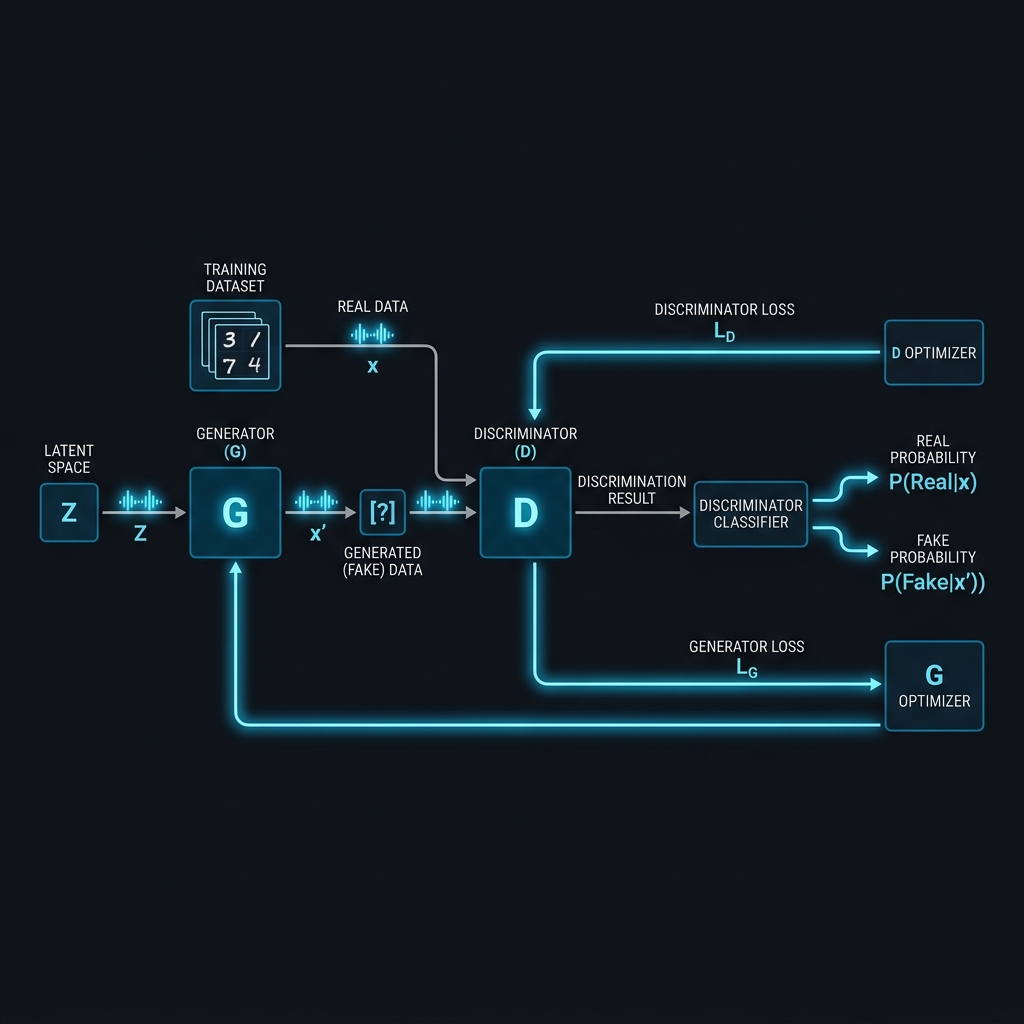
GAN Architecture Flow
[Source Face Data] → [Generator Network] → [Synthetic Image] ↔ [Discriminator Network] ← [Real Target Data]
The result is a seamless blend of source movements on a target face.
The Merging Phase
The final step of deepfake technology is merging the generated face back into the original video. This is not just a copy-paste job. The AI must adjust the skin tone, handle occlusions (like a hand moving in front of the face), and match the grain and resolution of the source footage. Advanced synthetic media implementations use "Poisson blending" and "Seamless cloning" techniques to make the edges invisible to the naked eye.
5. Types of Deepfakes Businesses Must Recognize
Understanding these types across different media types is critical for organizational security. Not all deepfakes are created equal. In 2026, enterprises face a variety of synthetic threats that require different defense mechanisms. Recognizing these types is essential for maintaining corporate security and personal privacy.
Face Swap AI (The Classic Deepfake)
The most common face swap ai replaces one person's face with another's. While often used for entertainment, it is increasingly used in "Business Email Compromise" (BEC) attacks that have migrated to video. An attacker might join a Zoom call with the face of a regional manager to "bless" a questionable transaction. (This is the step most teams skip — and it shows.) The fidelity of modern face swap ai is so high that standard video compression often masks the minor artifacts that would otherwise give it away.
Voice Cloning (Audio Deepfakes)
Voice cloning is arguably more dangerous than video because it is easier to deploy. An attacker only needs about 30 seconds of high-quality audio—often harvested from a YouTube interview or a podcast—to create a clone. In 2024, a Hong Kong company was defrauded of $25 million because an employee believed they were on a call with their CFO. The voice cloning was so accurate that it bypassed the employee's natural skepticism. UseShift specializes in building "Identity Verification" workflows that prevent these audio-based breaches by using cryptographic handshakes between AI agents.
Lip-Syncing and Video Re-enactment
These techniques allow an attacker to take an existing video of a person and change what they are saying. The synthetic manipulation here is subtle. The face stays the same, but the mouth movements are perfectly matched to new, malicious audio. This is often used for misinformation, making it look like a political leader or a CEO is making a controversial statement. Unlike a full face swap, deepfake technology for lip-syncing requires less data, making it faster to produce and harder to spot.
6. Generative AI vs. Deepfakes: A Comparison
While often confused, synthetic media occupies a specific niche within the broader Generative AI ecosystem. It is common to confuse these terms. While they share the same underlying math, their intent and output differ. This table clarifies the definition of deepfakes in the context of the broader AI market.
| Feature | Generative AI (General) | Deepfakes (Specific) |
|---|---|---|
| Primary Goal | Create new, original content (text, art, code). | Mimic or replace existing human likeness. |
| Core Technology | Large Language Models (LLMs), Transformers. | GANs, Autoencoders, Diffusion Models. |
| Common Use Cases | Drafting emails, generating stock images, coding. | Impersonation, parodies, digital dubbing. |
| Risk Profile | Hallucinations, copyright infringement. | Fraud, defamation, social engineering. |
| Identity Required | Often anonymous or fictional. | Requires a specific target (source data). |
As you can see, the definition of deepfakes is narrower and more focused on the replication of identity. While Generative AI is a "reactive tool" that creates when prompted, deepfakes are often "targeted outputs" designed to deceive. If you are comparing agentic ai vs generative ai, remember that agents can be trained to recognize the patterns of deepfakes, turning the tech into a defensive shield.
7. The Real-World Risks of Deepfakes in 2026
Synthetic identity fraud translates into significant financial and reputational risks for modern businesses. It isn't just a theoretical problem. In 2026, the risks have become a daily reality for IT departments and public relations teams. The velocity of AI development means that a vulnerability discovered on Monday can be exploited on Tuesday. Businesses must be prepared for attacks that are indistinguishable from reality.
Corporate Fraud and "CEO Gift Card" Scams 2.0
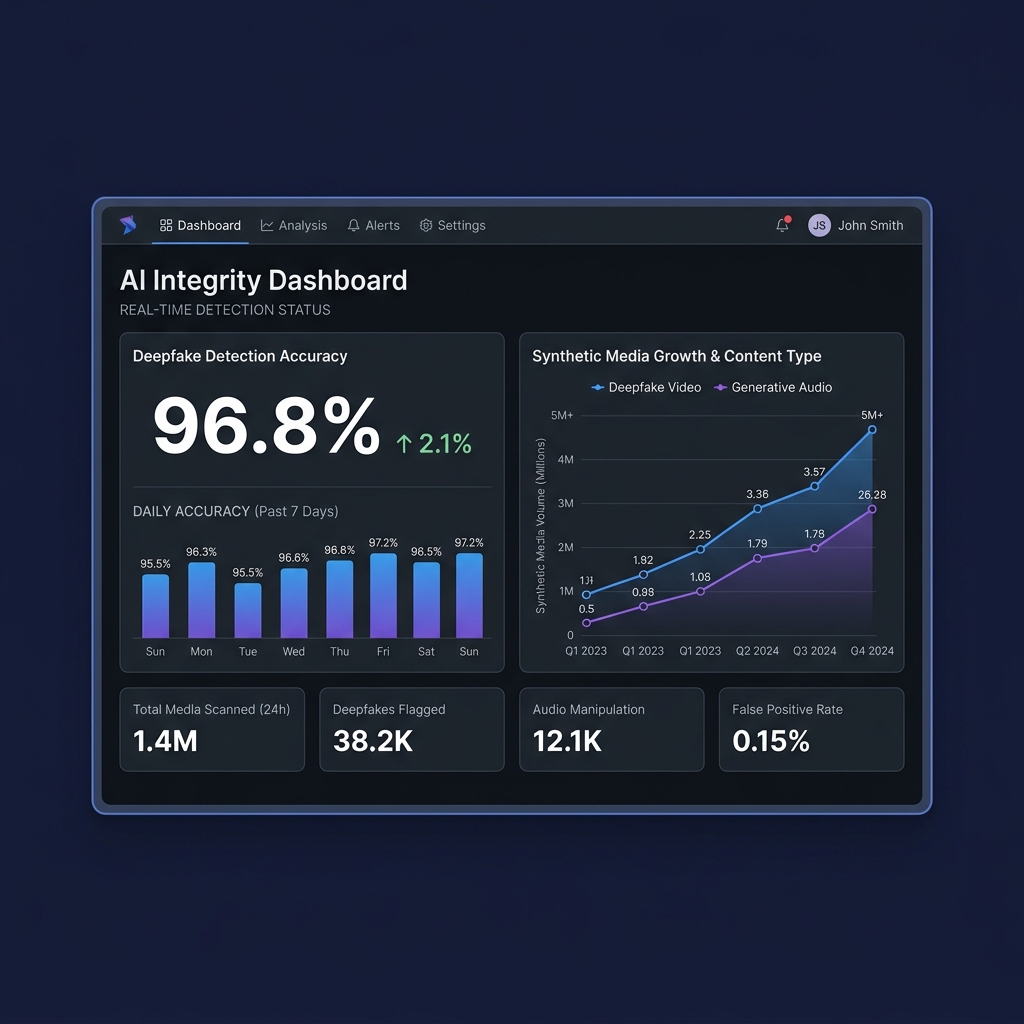
Traditional phishing involved poorly written emails. The 2026 version involves a high-definition video call from your boss. These attacks use deepfake technology to create a sense of extreme urgency. Because the victim "sees" and "hears" the person they trust, their logical defenses drop. According to FBI Internet Crime Reports (2025): Losses from deepfake-enhanced Business Email Compromise reached $5.8 billion annually. This is a staggering increase from the pre-AI era.
Brand Reputation and Fake Endorsements
For brands, the technology represents a nightmare for control. Malicious actors can create videos of a popular influencer or a company executive endorsing a scam or making offensive remarks. Because these videos go viral instantly, the "correction" often arrives too late to stop the stock price from dipping or customers from leaving. This is why we advocate for proactive media monitoring and digital watermarking for all corporate communications.
High-Risk Scenarios
- Live Interviews: Journalists being fooled by synthetic subjects during remote interviews.
- Legal Evidence: Deepfakes used to fabricate "proof" in lawsuits or criminal trials.
- KYC Bypass: Using face swap ai to bypass "Know Your Customer" video verification on banking apps.
Social Engineering and High-Fidelity Phishing
Deepfakes are the ultimate social engineering tool. By cloning the voice of a help desk technician or a co-worker, attackers can talk their way into sensitive systems. They don't need to hack the server if they can "hack" the person in charge of the password. This is why we recommend moving toward "Zero Trust" architectures. In a Zero Trust world, identity is verified by keys and tokens, not by how a person looks on a screen.
8. Detection and Mitigation: Fighting AI with AI
Combating these threats requires a multi-layered defense strategy powered by detection AI. If AI is the problem, AI is also the solution. Defending against synthetic attacks requires a multi-layered approach that combines human skepticism with automated technical checks. You cannot rely on "gut feeling" anymore. You need forensic tools.
Visual Artifacts and "Deepfake Glitches"
While deepfake technology is excellent, it is not perfect. In 2026, many fakes still struggle with certain details:
- Unnatural Blinking: Many models forget to simulate the natural frequency of human blinking.
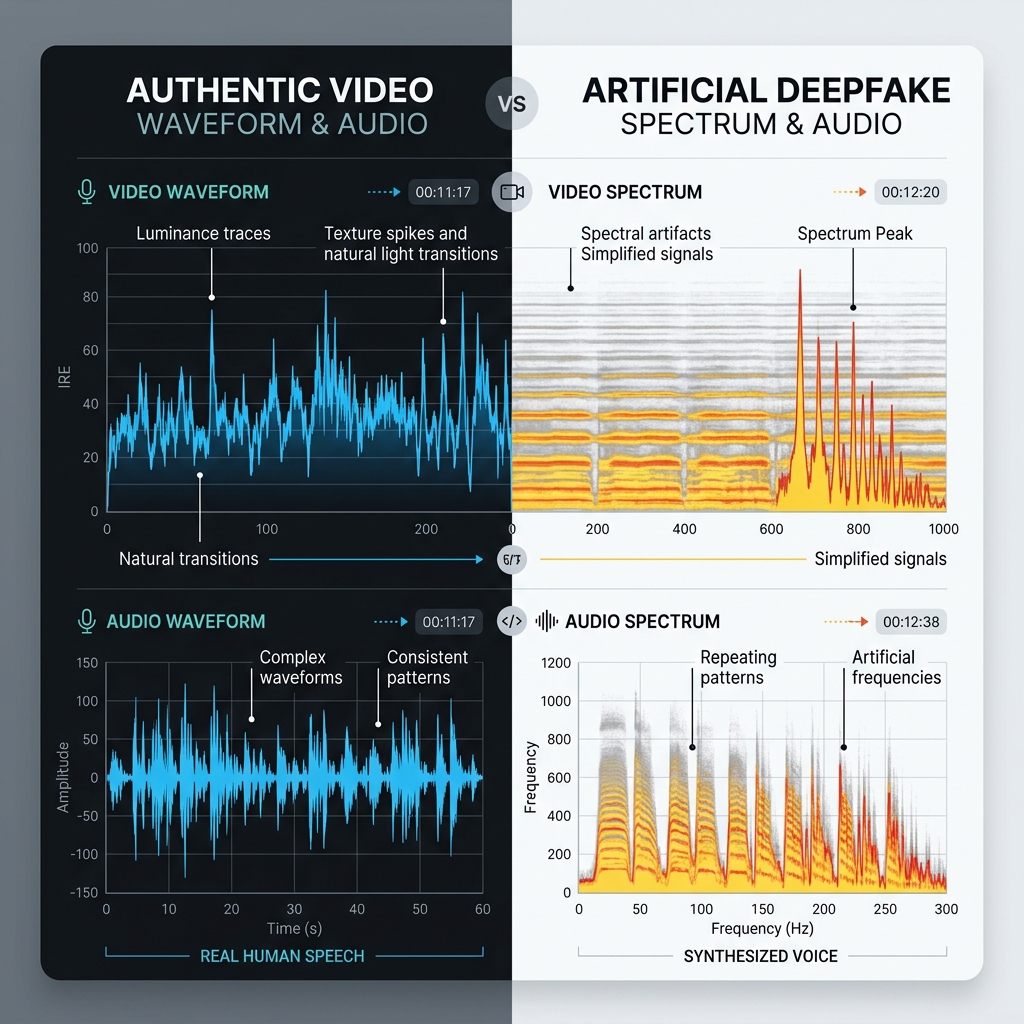
- Irregular Heartbeats: High-end detection AI can monitor the subtle "flushing" of the skin caused by blood flow—a process called photoplethysmography—which deepfakes often fail to replicate.
- Edge Artifacts: Look for blurring around the jawline or where the hair meets the forehead. These are common points of failure for face swap ai.
Forensic Metadata and Blockchain
The industry is moving toward "Content Credentials." This is a standard (C2PA) that attaches a tamper-proof digital signature to every image or video. It acts as a "nutrition label" for media, showing exactly when it was captured and if it was modified by AI. We integrate these protocols into our web development services, ensuring that our clients' digital assets are verified from the moment they are uploaded.
Pro-Tip: How to spot a deepfake
If you suspect a video call is a deepfake, ask the person to turn their head 90 degrees or put their hand in front of their face. Most real-time deepfake technology struggles with profile views and "hand-over-face" occlusions. If the face "glitches" or the hand appears to be behind the face, it is likely a synthetic stream.
Identity Verification Workflows
The most effective mitigation is process-based. Never authorize a high-value transaction based on a single voice or video call. Implement a "Multi-Factor Approval" process where the second factor is a secure, out-of-band communication channel. UseShift helps companies build these autonomous gatekeepers that scan incoming communications for synthetic markers before they ever reach a human employee. This is a core part of our ai security offerings.
9. Legal and Ethical Framework in 2026
The legal definition of deepfakes is now being codified to protect individual identity and corporate assets. The definition of deepfakes has finally caught up with the law. In 2026, governments have enacted strict regulations to curb the abuse of synthetic media. The EU AI Act was the first major step, requiring clear labeling for all AI-generated content that looks like a real person. In the United States, several Executive Orders have established "digital likeness" rights, making it a federal crime to clone someone's voice or face for commercial gain without their explicit consent.
Ethical considerations are just as important. Businesses must decide where they stand on synthetic media. Is it ethical to use a deepfake of a deceased founder in an anniversary video? Is it okay to use an AI-cloned voice for customer support? These questions don't have easy answers, but they require a clear policy. Transparency is the gold standard. If you use synthetic media, tell your audience. Trust is harder to build than a neural network, and far easier to break. We believe that every organization needs a formal AI Ethics Charter to handle these challenges safely. This document should outline the permissible uses of synthetic media and the disclosure requirements for all stakeholder communications. Without it, you are flying blind in a storm of digital deception. It is not just about legality; it is about the long-term integrity of your brand.
According to the AI Ethics Commission (2025): 85% of consumers report they will stop buying from a brand if they discover the brand used undisclosed deepfakes in their marketing. The market demands honesty. At UseShift, we help you draft ethical AI charters that align your innovation with your values, ensuring you use synthetic media for good, not just for growth.
Conclusion: Navigating the Synthetic Future
The deepfakes def represents the dual nature of our technological era. On one hand, it offers a future of limitless creativity and personalized communication. On the other, it creates a risk surface that is broader and more convincing than anything we have seen before. You cannot ignore this technology. It is already here, and it is getting better every day.
Understanding what are deepfakes in ai is no longer just for the IT department—it is a core literacy for every business leader. As we move further into 2026, the ability to distinguish between the "real" and the "synthetic" will be the defining skill of the decade. Don't leave your security to chance. Partner with our team to build resilient, ethical, and secure AI systems that protect your identity while amplifying your impact.
Key Takeaways
- A deepfake definition involves the high-fidelity replacement of likeness using neural networks.
- GANs and Autoencoders are the technical engines behind hyper-realistic synthesis.
- Corporate risk has scaled to $5.8B annually due to deepfake-enhanced fraud.
- Defensive strategies must combine technical forensic tools with human process verification.
Ready to secure your business? Discuss your AI security roadmap with UseShift today.