

Which Azure certification should I start with in 2026?
The Azure Fundamentals (AZ-900) is the ideal starting point for anyone new to the platform. From there, most professionals pivot to the Azure Administrator (AZ-104) or Azure Developer (AZ-204) before specializing in Security or Architecture.
Don't just migrate. Master.
In the rapidly evolving landscape of 2026, cloud computing has transitioned from a competitive advantage to a foundational necessity for global enterprises. At the heart of this digital transformation lies Microsoft Azure, a platform that continues to dominate the hybrid cloud market and enterprise AI integration. For IT professionals, an Azure certification is no longer just a line on a resume; it is a validation of technical proficiency in a world increasingly governed by autonomous systems and distributed architectures.
What is an Azure Certification?
An Azure certification is an industry-recognized credential issued by Microsoft that validates your expertise in specific roles and technologies within the Azure ecosystem.
Unlike general IT certifications, Azure certs are "role-based," meaning they are designed around the actual tasks performed by professionals like DevOps engineers, data scientists, and security architects. In 2026, Microsoft has further refined these paths to include deep integrations with OpenAI, autonomous agentic workflows, and advanced cybersecurity protocols.
Key Takeaways
- Validates role-specific expertise (Admin, Dev, Security, Architect).
- Recognized globally as a gold standard in cloud computing.
- Provides a structured path for continuous skill development.
The Azure Certification Path 2026: A Layered Approach
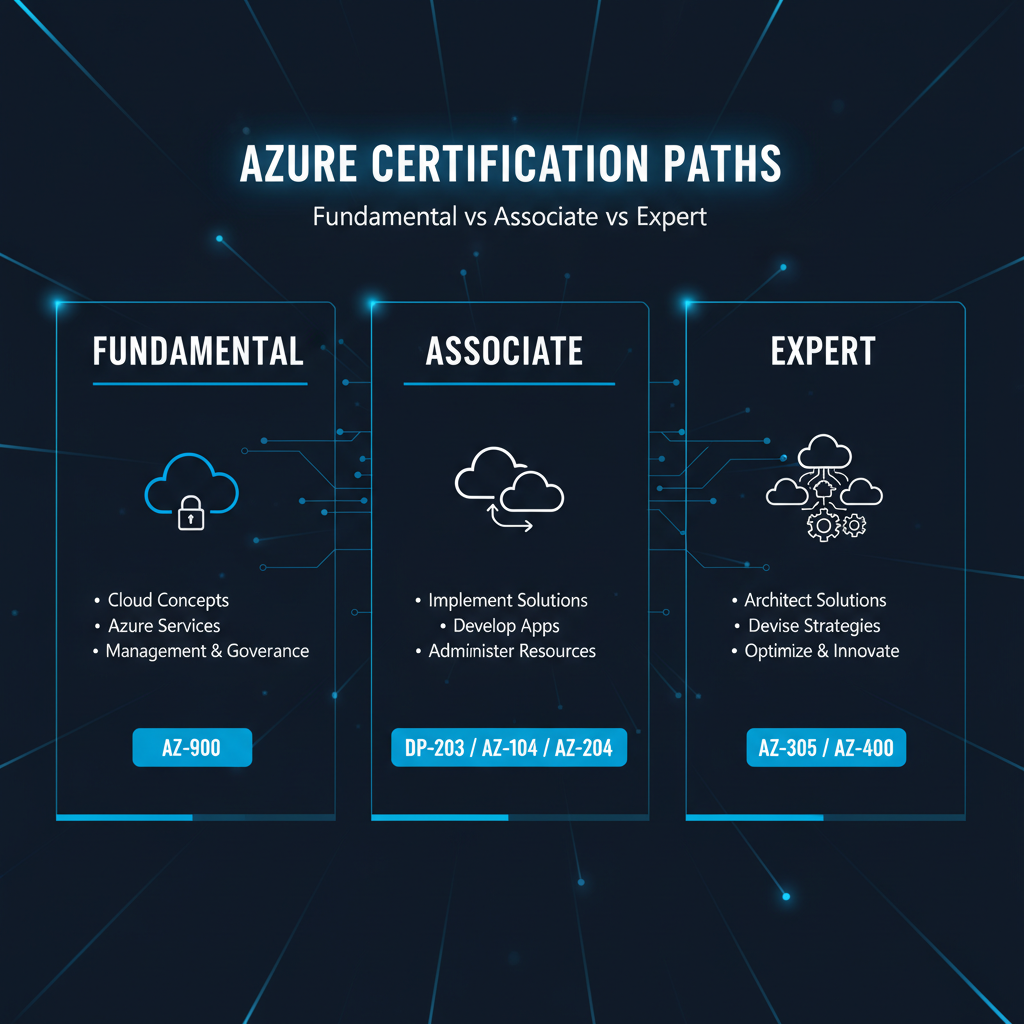
The current azure cert path is divided into four distinct levels of expertise. Understanding this hierarchy is crucial for planning your professional development.
1. Fundamental Level (AZ-900)
The entry point. Covers basic cloud concepts, Azure services, security, privacy, and compliance.
2. Associate Level
Core technical roles: AZ-104 (Admin), AZ-204 (Dev), AZ-500 (Security).
3. Expert Level
Advanced roles: AZ-305 (Solutions Architect), AZ-400 (DevOps Engineer).
4. Specialty Level
Deep dives: SAP on Azure, Virtual Desktop, IoT Developer (AZ-220).
| Certification | Level | Ideal Role | Exam | Avg. Salary (2026 Est.) |
|---|---|---|---|---|
| Azure Fundamentals | Fundamental | Beginners / Sales | AZ-900 | $85,000 |
| Azure Administrator | Associate | System Admins | AZ-104 | $125,000 |
| Azure Solutions Architect | Expert | Architects | AZ-305 | $165,000 |
| Azure Security Engineer | Associate | Security Analysts | AZ-500 | $145,000 |
| Azure DevOps Engineer | Expert | DevOps Engineers | AZ-400 | $155,000 |
| Azure AI Engineer | Associate | AI Developers | AI-102 | $150,000 |
Detailed Breakdown: Most Popular Certs
Azure Administrator Associate (AZ-104)
Widely considered the "gold standard" for cloud administrators. It tests your ability to manage Azure identities, storage, compute, and virtual networking.
- Microsoft Entra ID (Azure AD): Managing user accounts and Conditional Access.
- RBAC: Implementing the principle of least privilege.
- Storage: Configuring redundancy and lifecycle policies.
Azure Solutions Architect Expert (AZ-305)
The pinnacle for architects. Requires deep understanding of how services fit together to create scalable, secure solutions.
Architecture Tip: AZ-305 candidates must excel at translating complex business requirements into robust technical designs that balance cost and performance.
Technical Deep-Dive: Azure Security Certification (AZ-500)
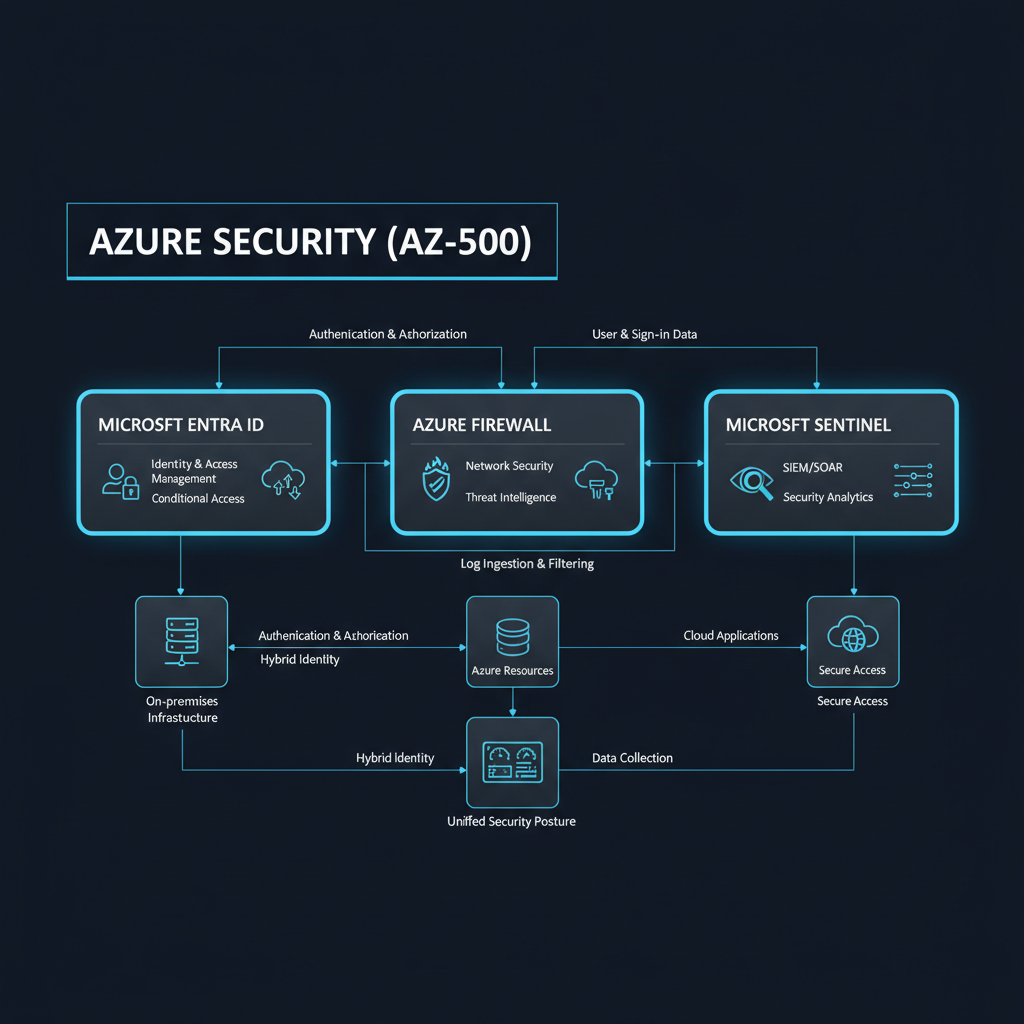
As cyber threats become more sophisticated in 2026, the azure security certification (AZ-500) has become a top requirement.
Key focus areas include Identity Management, Platform Protection (NSGs, WAF, AKS), and Security Operations with Microsoft Sentinel.
💡 Pro Tip
In 2026, identity is the new perimeter. Master Microsoft Entra ID and Privileged Identity Management (PIM) to secure the root of trust.
Azure Certification and the Hybrid Cloud
The 2026 path places heavy emphasis on Azure Arc. Certified professionals must know how to project on-premises resources into Azure and unify security via Microsoft Defender for Cloud across multi-cloud environments.
Industry-Specific Applications
- Healthcare: Managing HIPAA-compliant data lakes and AI models.
- Finance: High-frequency trading and robust compliance audits.
- Manufacturing: Smart factories using Azure IoT and Digital Twins.
The Role of AI in Azure Certification 2026
The explosion of Generative AI has made the Azure AI Engineer Associate (AI-102) critical. Professionals must now integrate Azure OpenAI Service and build autonomous agents using Azure AI Foundry.
Case Study: UseShift's AI Transformation
At UseShift, we recently helped a logistics firm reduce manual processing time by 70%. Using AZ-500 principles and AI-102 skills, we built autonomous agents that scan invoices and update ERP systems in real-time with 99.9% accuracy.
How to Choose Your Path
- Infrastructure: AZ-900 → AZ-104 → AZ-305.
- Developer: AZ-900 → AZ-204 → AZ-400.
- Security: AZ-900 → AZ-500 → SC-100.
Practical Guide: Preparing for the Exam
Step 1: Microsoft Learn
Start with official interactive paths and Sandboxes.
Step 2: Hands-on Labs
Deploy a 3-tier app. Touch the Portal, CLI, and Bicep.
Step 3: Practice Tests
Use MeasureUp or Whizlabs to simulate the exam environment.
Common Mistakes to Avoid
- Skipping the Fundamentals (AZ-900).
- Over-reliance on theory without hands-on practice.
- Ignoring the weekly updates to Azure services.
Conclusion: Your Path to Mastery
The journey to cloud mastery is a marathon. By following the right microsoft azure certification path, you position yourself at the forefront of the cloud revolution.
Ready to Start Your Shift?
Contact UseShift today for a free audit and start your journey toward cloud mastery.
Discuss Your AI Roadmap →Key Takeaways
- Azure Certifications are role-based and updated for the AI era.
- AZ-104 and AZ-305 remain the foundational pillars for infrastructure roles.
- Security (AZ-500) and AI (AI-102) are the highest-growth areas in 2026.